-p-500%20(1).png)
Ohio Statute of Limitations on Debt: What You Need to Know
Need Help Reviewing Your Account?
Contact UsReceiving a collection notice for an old debt can be stressful and confusing. Your first thought might be, "Do I still have to pay this?" In Ohio, the answer isn't a simple yes or no. A collection notice for an old debt doesn't automatically mean you can be sued, but it also doesn't mean the balance simply disappears.
The key lies in understanding Ohio's statute of limitations—a law that sets a deadline for how long a creditor has to file a lawsuit to collect a debt. This legal timeframe is separate from other factors, like how long an account can stay on your credit report or a collector's internal deadlines. This article will provide practical guidance on how to navigate this situation, from identifying your debt type to understanding how to respond if you receive court papers.
Key Takeaways
- For most consumer debts in Ohio, the statute of limitations is generally six years, but the exact period depends on the debt's legal classification and when the claim legally began.
- When the statute of limitations expires, it typically blocks the creditor's ability to win a lawsuit against you; it does not automatically erase the debt or remove it from your credit report.
- Never ignore a court summons. The age of the debt alone doesn't prevent a lawsuit, and failing to respond can lead to a default judgment against you.
- Before making a payment or written promise on an old debt, understand the legal consequences, as it could potentially restart the statute of limitations clock.
What Is Ohio’s Statute of Limitations on Debt?
In Ohio, the time a creditor has to sue you over a debt depends on the type of agreement you had. There isn't a single number that applies to every situation. Recent changes in Ohio law have set clearer timelines for consumer debts.
Here’s a breakdown of the most common categories under the Ohio Revised Code (ORC):
- Written Contracts: The statute of limitations for debts based on a written contract is six years under ORC 2305.06. This includes loans or credit agreements where you signed a formal document.
- Consumer Transactions: Under ORC 2305.07(C), many consumer debts—including unwritten agreements and account statements such as credit cards—have a six-year limit.
- Oral or Implied Contracts: The general oral-contract limit is four years, but credit card, medical, and similar consumer debts usually fall under the six-year consumer-transaction rule instead.
Ohio law changed in 2021. Debts that originated before those changes may follow different rules, including a prior eight-year limit on written contracts. Older accounts can be hard to classify, so consult an attorney when the timeline is unclear.
When Does the Clock Actually Start?
The start date for the statute of limitations is when the "cause of action accrued," which is legalese for when the creditor first had the right to sue. For consumer transactions under ORC 2305.07(C), the clock starts 30 days after the last charge or payment made on the account, whichever is later.
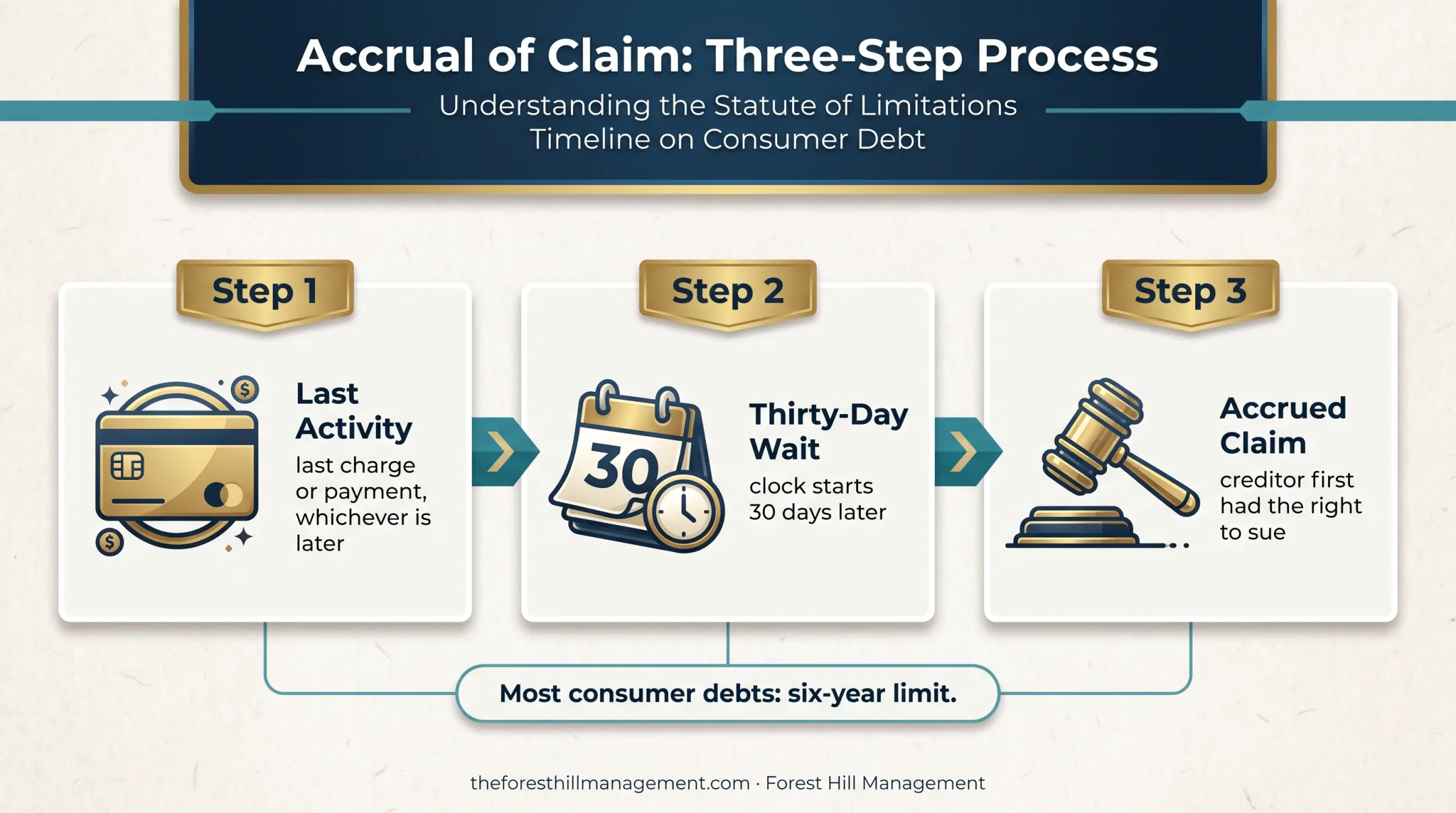
Let's look at a hypothetical example:
- You made your last credit card purchase on March 1, 2022.
- You made your last payment on April 15, 2022.
- The later date is April 15, 2022.
- The clock starts 30 days later, around May 15, 2022.
- The six-year limit would likely expire around May 15, 2028.
This is just an illustration. The actual date requires a careful review of your account history and the specific law that applies.
When Does the Clock Start—and Can It Change?
Determining the statute of limitations isn't as simple as looking at the date you opened an account or when a collector sent you a letter. Certain dates matter far more than others.
The most legally significant date is often tied to your last activity. As mentioned, for many Ohio consumer debts, the clock is triggered by your last charge or payment.
Other dates—such as when an account was "charged-off" by the original creditor or sold to a new collection agency—do not typically set the statute of limitations. Selling a debt to a new owner generally doesn't create a new deadline; the new owner is bound by the original timeline.
Can the Clock Be Restarted?
Yes, certain actions can "revive" a debt and restart the statute of limitations clock. Under Ohio law (ORC 2305.08), this can happen if you:
- Make a payment on the debt
- Make a written acknowledgment of the debt that you sign
- Make a written promise to pay the debt that you sign
Because of this, you should be very cautious about your actions on an old debt. A small "good faith" payment could reset the entire six-year period, giving the creditor a fresh opportunity to sue.
Before you pay, pause. If you believe a debt might be near or past the statute of limitations, seek to understand your legal position first. Making a payment or signing an agreement without knowing the consequences could put you in a worse position than before.
To figure out your timeline, gather the evidence you have:
- The original contract or agreement
- Itemized account statements
- Your payment history
- Collection notices or correspondence
What Happens When a Debt Becomes Time-Barred?
When a debt becomes "time-barred," it means the legal deadline for a creditor to sue you and get a court judgment has passed. However, the debt itself doesn't magically vanish.
A collector can still contact you to request voluntary payment on a time-barred debt. Under federal Regulation F, they cannot sue you or threaten to sue you for it.
If a collector threatens legal action on a debt you know is time-barred, they may be violating the law. Old debts that reappear this way are sometimes called "zombie debts."
Lawsuit Deadlines vs. Credit Reporting
The statute of limitations for a lawsuit is completely separate from the timeline for credit reporting.
Under the federal Fair Credit Reporting Act (FCRA), most negative information, including collection accounts, can only remain on your credit report for a limited time. For a collection account, this period is typically seven years plus 180 days from the date of the first delinquency that led to the collection status.
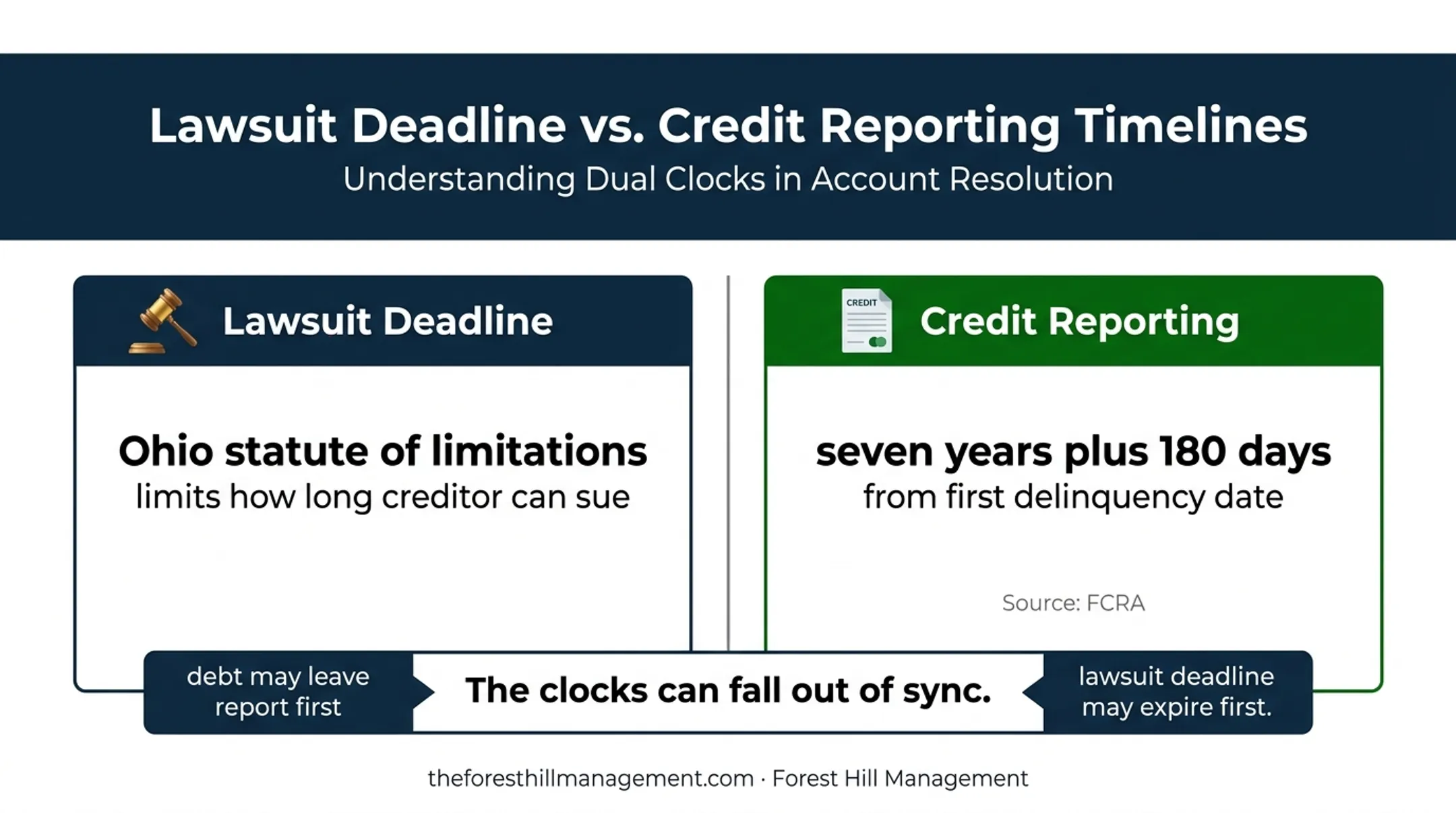
Those two clocks can fall out of sync:
- A debt can drop off your credit report while a collector is still within Ohio's statute of limitations to sue
- A debt can be past the lawsuit deadline but still appear on your credit report until the seven-year reporting period ends
Making a payment on an old debt will not restart the seven-year credit reporting clock for that same delinquency.
What Should You Do About an Ohio Debt?
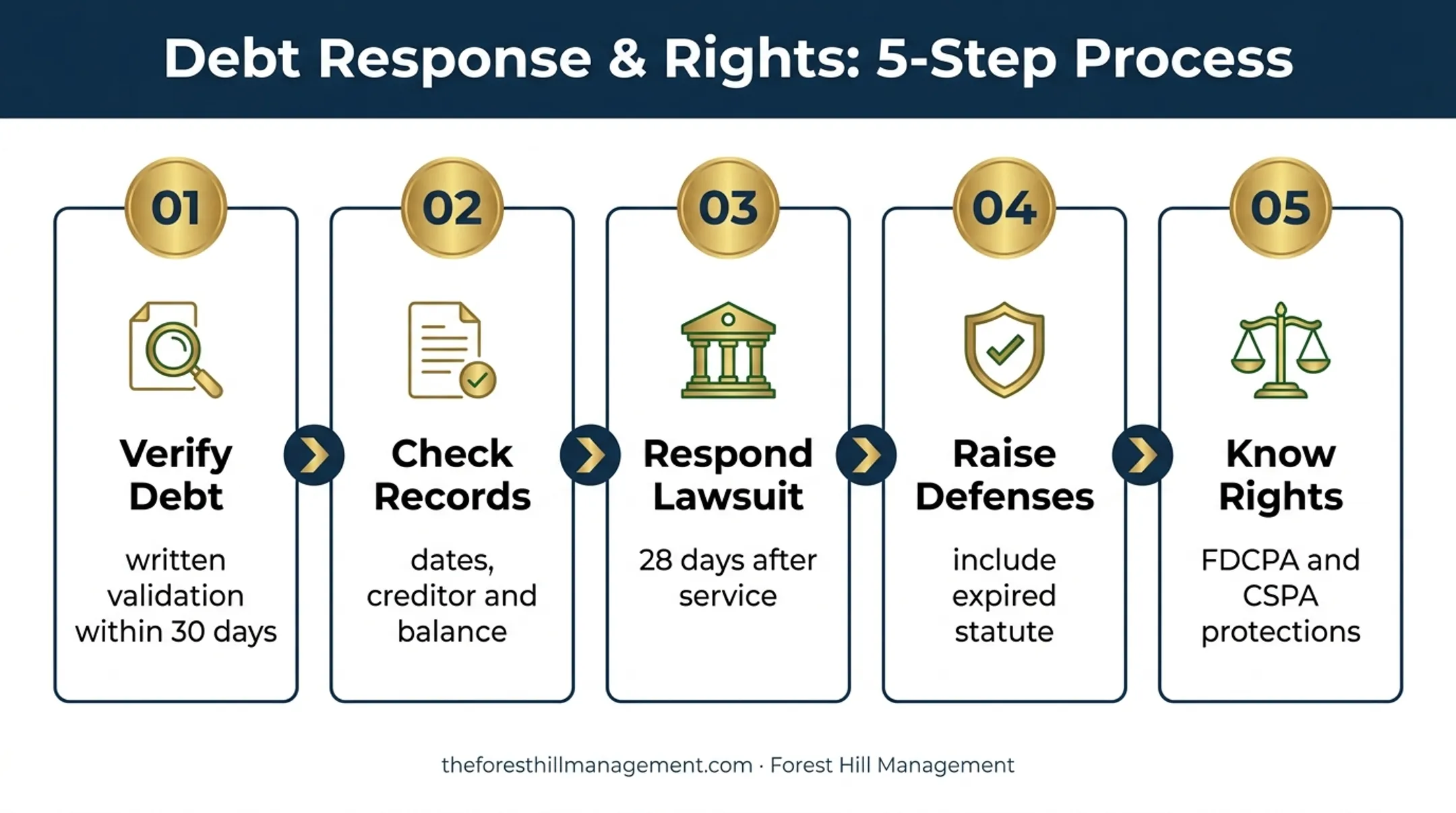
If you're contacted about an old debt in Ohio, don't panic. Take a methodical approach to protect your rights.
- Verify the Debt: Confirm the debt is yours and the amount is accurate. Under the FDCPA, you can send a written validation request within 30 days of first contact—keep a copy and proof of delivery.
- Check Your Records: Compare the collector's details with yours. Do the dates, original creditor, and balance match?
- Never Ignore a Lawsuit: If you get a summons or complaint, respond. In Ohio, you generally have 28 days after being served to file an answer. Miss that deadline and the creditor can win a default judgment—even if the debt is disputed or time-barred.
- Raise Your Defenses: Put every defense in your answer, including an expired statute of limitations. A judge will not raise it for you; the creditor must prove the case was filed on time.
- Know Your Rights: The federal FDCPA and Ohio's Consumer Sales Practices Act (CSPA) bar deceptive, harassing, or unfair collection tactics, including false legal threats, misstated debt status, and calls at unreasonable hours.
Finding a Path to Resolution
Once you understand the debt's status, you can explore your options. Common paths include:
- Negotiating a settlement
- Setting up a payment plan
- Seeking help from a nonprofit credit counselor
Each path has different financial and legal implications.
Forest Hill Management can help you understand resolution options for an outstanding balance. For legal disputes, lawsuits, or advice on whether a statute of limitations defense applies to your case, consult an Ohio-licensed attorney.
This article is for educational purposes and is not a substitute for personalized legal or financial advice.
Frequently Asked Questions
What is the statute of limitations for debt collection in Ohio?
For most consumer debts in Ohio, including written contracts and credit cards, the statute of limitations is six years. Debt type, the origin date, and your payment history can change which deadline applies.
What is the statute of limitations for credit card debt in Ohio?
Credit card debt in Ohio typically falls under the six-year limit for written contracts or consumer transactions. The clock usually starts 30 days after the last charge or payment, not from the charge-off date.
What happens to unpaid collections on my credit report after 7 years?
A collection account is usually removed from your credit report about seven years after the original delinquency. That timeline is separate from Ohio’s statute of limitations, which only limits how long a creditor has to sue you.
What happens if a debt collector sues me in Ohio and I can't afford to pay?
You must file a response with the court within the 28-day deadline, even if you can't pay. Ignoring the lawsuit can result in a default judgment. You should seek advice from legal aid or a qualified attorney to understand your options and defenses.
Can I dispute a debt that was sold to a collection agency in Ohio?
Yes. You have the right to dispute any debt you believe is inaccurate, incomplete, or not yours, regardless of whether it was sold. A written dispute forces the collector to provide verification before continuing collection efforts.
What are the debt collection laws in Ohio?
Ohio debt collection is governed by the state’s statutes of limitations and the Ohio Consumer Sales Practices Act (CSPA), plus federal laws such as the FDCPA and the FCRA.