-p-500%20(1).png)
NY State Statute of Limitations on Debt Collection: Complete Guide
Need Help Reviewing Your Account?
Contact UsWhat Is the New York State Statute of Limitations on Debt Collection?
A statute of limitations caps how long a creditor or debt buyer has to sue you over a debt. It does not erase what you owe, and it does not stop every collection call or letter.
Here's where most people get confused: the actual deadline depends on several moving parts.
- The type of debt (credit card, medical, retail, student loan)
- The date the claim accrued (not always the same as your last payment)
- Whether a creditor already won a judgment
- Whether New York law or another state's law controls
This guide shows how to identify your deadline and what New York's Consumer Credit Fairness Act changed. It also covers how to respond to collection letters or a summons without accidentally giving up a defense.
Legal disclaimer: This article is for general education only. Debt collection laws change, and individual facts matter enormously. If you've received a lawsuit or summons, talk to a licensed New York attorney or a legal-aid provider before taking action.
Key Takeaways
- Many New York consumer-credit lawsuits face a three-year deadline under CPLR 214-i, but the exact period depends on debt type and facts.
- The lawsuit filing deadline is separate from credit-report reporting periods and from how long a judgment can be enforced.
- A payment or new written agreement can restart the clock—review the risk before you act.
- Never ignore a summons and complaint, even if you think the debt is too old — you may still need to raise that defense in court.
New York's Debt Collection Statute of Limitations Explained
A statute of limitations sets a deadline for filing a lawsuit. It doesn't cancel a debt automatically. Once that window closes, a creditor loses the right to sue, but the underlying obligation can still exist on paper.
The Consumer Credit Fairness Act and the Three-Year Rule
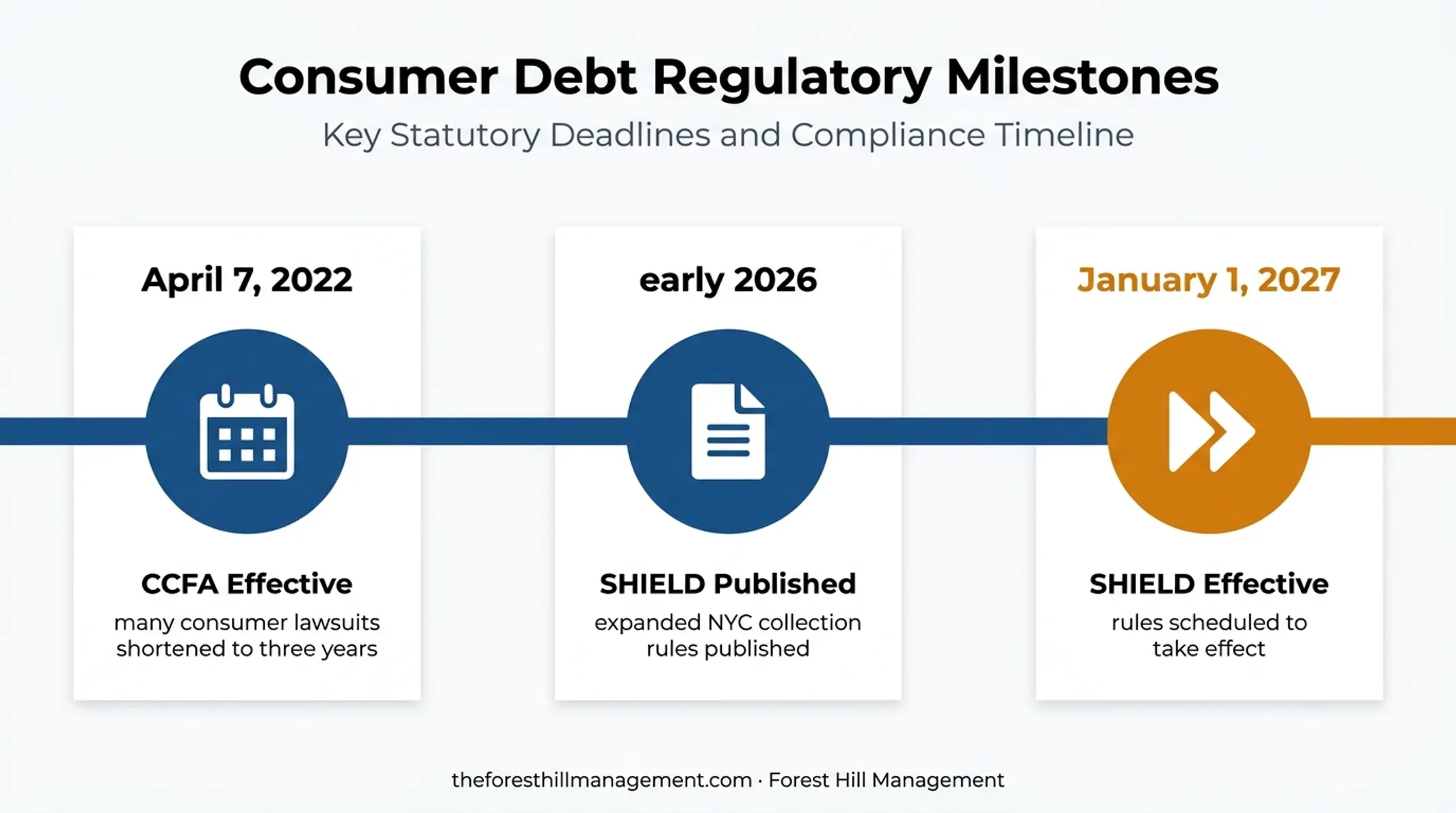
New York's Consumer Credit Fairness Act took effect on April 7, 2022, shortening the timeline for many consumer-debt lawsuits. Under CPLR 214-i, a lawsuit arising from a consumer credit transaction generally must be filed within three years, subject to specific statutory exceptions involving UCC Article 2 and other listed provisions.
A "consumer credit transaction" under CPLR 105(f) means credit extended to an individual mainly for personal, family, or household purposes, not business use.
Consumer Debt vs. Business Debt
The three-year rule turns on the purpose of the credit, not simply who is being sued.
- Consumer debt: Credit cards, personal loans, medical bills — generally falls under the three-year rule
- Business debt: Loans or lines of credit used primarily for a business purpose may fall under CPLR 213(2)'s six-year contract period instead
A natural person being sued doesn't automatically mean the shorter consumer-credit deadline applies.
State Rules vs. NYC Collector Regulations
New York State sets the lawsuit deadline through CPLR 214-i statewide. New York City layers on additional licensing and conduct rules for collection agencies operating within the five boroughs.
NYC's expanded debt-collection rules (sometimes called the SHIELD provisions) were published in early 2026 but aren't scheduled to take effect until January 1, 2027. Don't assume those newer protections apply yet.
Out-of-State Debt and Existing Judgments
If your debt originated in another state, New York's borrowing statute (CPLR 202) may require comparing New York's limitations period against the period where the claim accrued. Generally, the shorter period controls, unless the claim accrued in favor of a New York resident.
Judgments work differently altogether. Once a creditor wins in court, the original statute of limitations stops mattering. Enforcement is governed by separate rules covering judgment duration, renewal, and liens, which we'll cover next.
How to Calculate the Deadline for Different Types of New York Debt
Figuring out your actual deadline takes more than a quick internet search. Follow this sequence:
- Identify the debt category — credit card, medical, retail contract, student loan, or another category
- Locate your account history — original agreement, statements, and payment records
- Determine the triggering event — usually the date of default, not the charge-off date or the date a collector bought the account
- Calculate the expiration date using the applicable period
- Check for exceptions — judgments, tolling periods, or out-of-state accrual
Deadlines by Debt Type
Medical credit cards or financing accounts (as opposed to a direct bill from your provider) may follow the ordinary consumer-credit rule instead of the medical-specific one. Check the actual contract, not just the type of provider.
Existing Judgments Change the Question
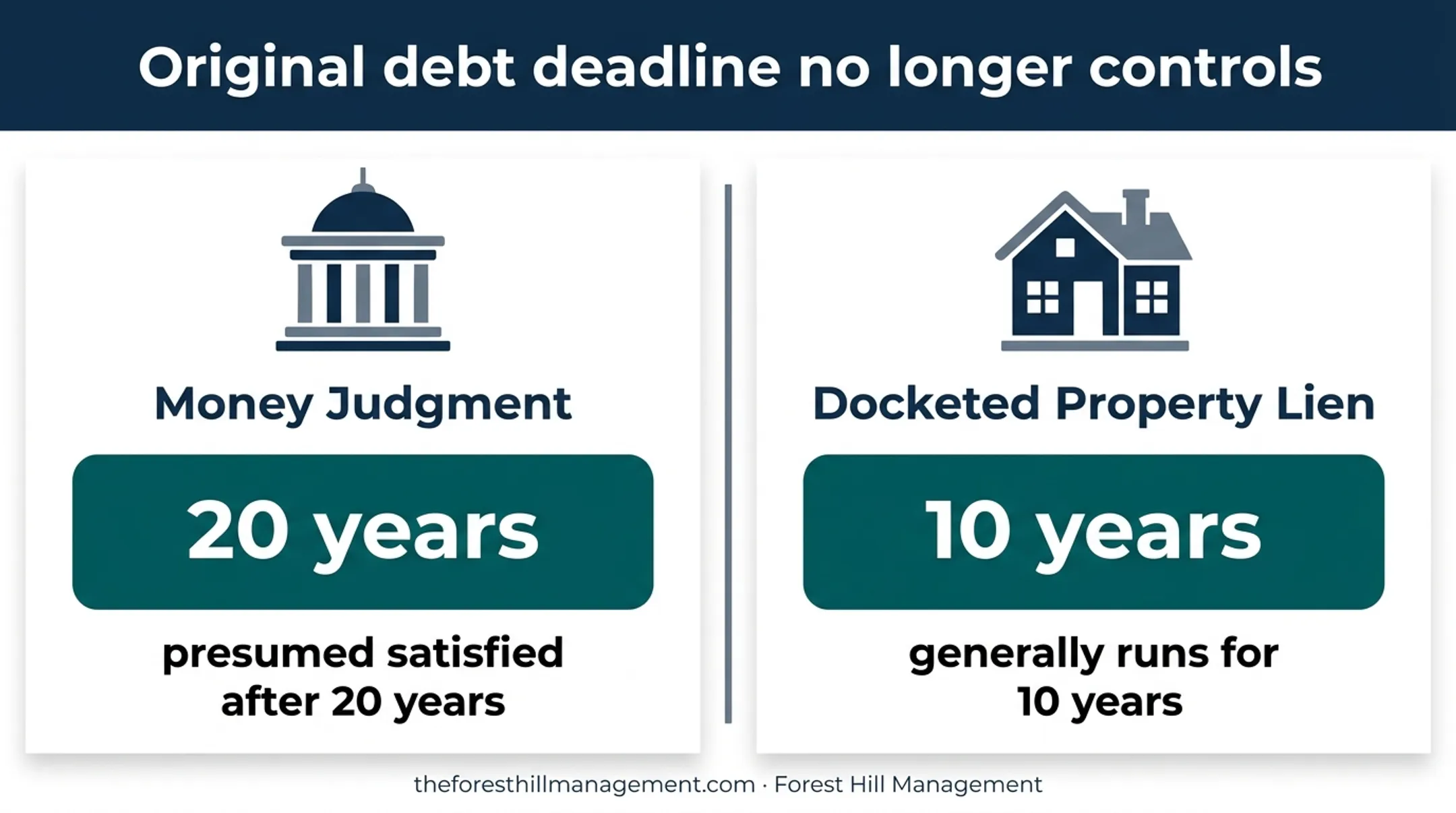
If a creditor already sued and won, the statute of limitations on the original debt is no longer the relevant question. New York presumes a money judgment is satisfied after 20 years, and a docketed lien on real property generally runs for 10 years.
Judgment interest, wage garnishment limits, and bank restraint exemptions follow separate rules. Confirm those details with an attorney if you're facing enforcement.
What Happens When the New York Debt-Collection Deadline Expires?
Expiration creates a defense to a lawsuit. It doesn't automatically delete the debt, wipe it from your credit report, or stop every collector from contacting you.
Several related concepts often get mixed together:
- Time-barred debt — past the lawsuit deadline, but the balance may still be accurate
- Inaccurate debt — wrong balance, wrong person, or duplicate account
- Discharged debt — eliminated through bankruptcy
- Paid debt — already satisfied, sometimes still shown as open in error
- Still enforceable debt — within the lawsuit window and collectible in court
What Collectors Can and Can't Do
Under federal Regulation F, a covered debt collector is prohibited from suing or threatening to sue on time-barred debt. The rule doesn't require a blanket federal disclosure stating the debt has expired. New York's own notice requirements fill some of that gap for state-licensed collectors.
Once a covered consumer-credit claim's three-year period has expired under the Consumer Credit Fairness Act, a later payment or acknowledgment does not revive it. Older guidance sometimes suggested any payment could restart the clock. That is not how CPLR 214-i works for covered claims today.
Before You Pay Anything
Before you send money or acknowledge a balance, request in writing:
- The original creditor's name
- The current balance and how it was calculated
- The date of last payment or default
- Documentation showing the collector's authority to collect
Credit Reporting Isn't the Same Question
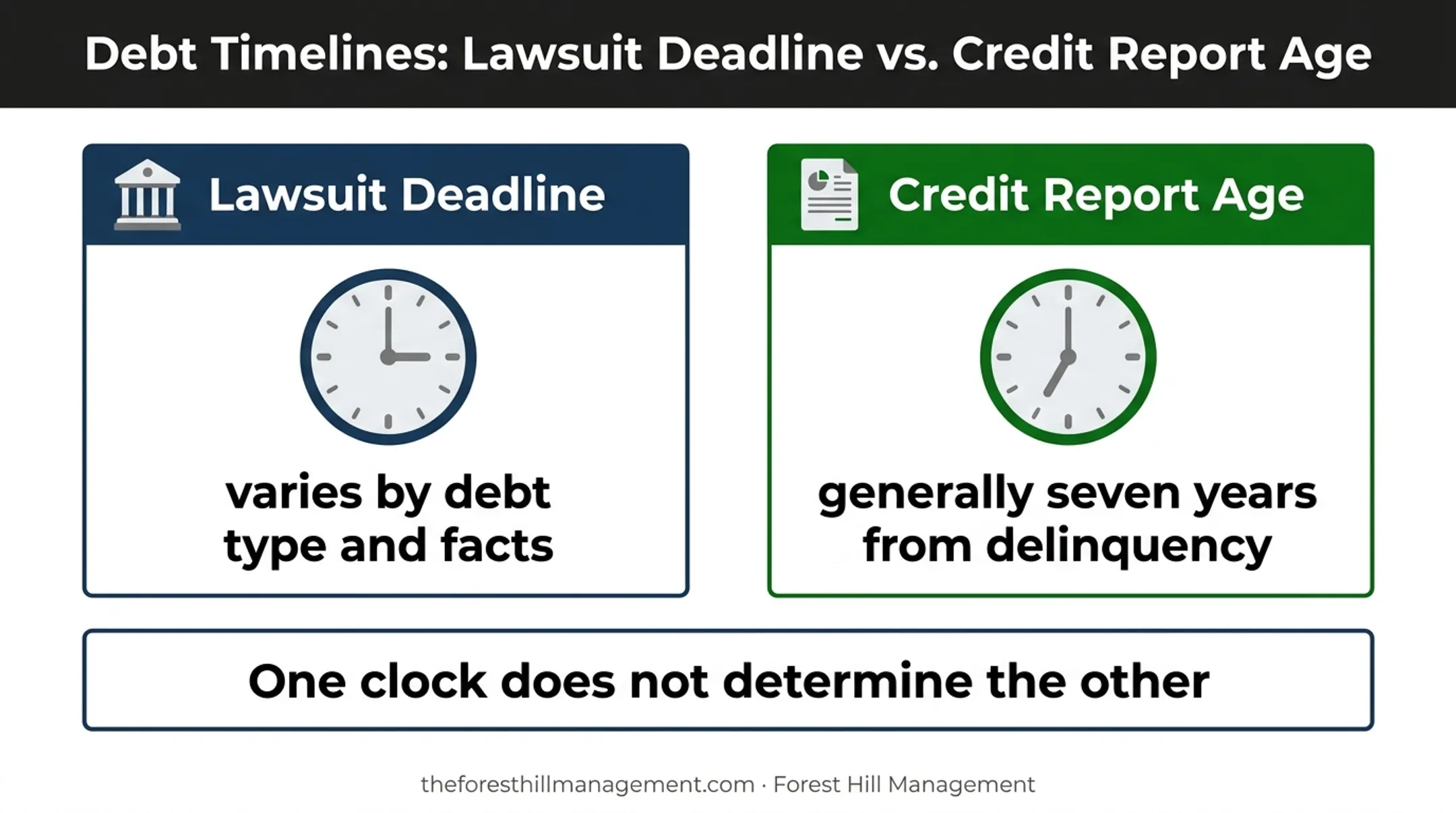
Separate federal rules govern an account's age on your credit report (generally seven years from delinquency). Those rules have nothing to do with whether a lawsuit is still timely. A debt can drop off your credit report while still within the lawsuit window, or vice versa.
How to Respond to Debt Collection Contact or a Lawsuit
How you respond in the first few weeks often matters more than the debt's age.
Handling Letters and Calls
- Keep every letter, envelope, email, and voicemail
- Log the date, time, and content of each contact
- Avoid confirming the debt is yours or admitting anything before you understand its status
- Never make a payment just to "make it go away" without checking the account details first
Disputing or Verifying a Debt
Send a written dispute requesting verification of the original creditor, account number, balance breakdown, and chain of ownership. Use a trackable method such as certified mail, ideally within 30 days of the collector's first written notice. That paper trail can require the collector to pause activity until it responds.
Responding to a Lawsuit
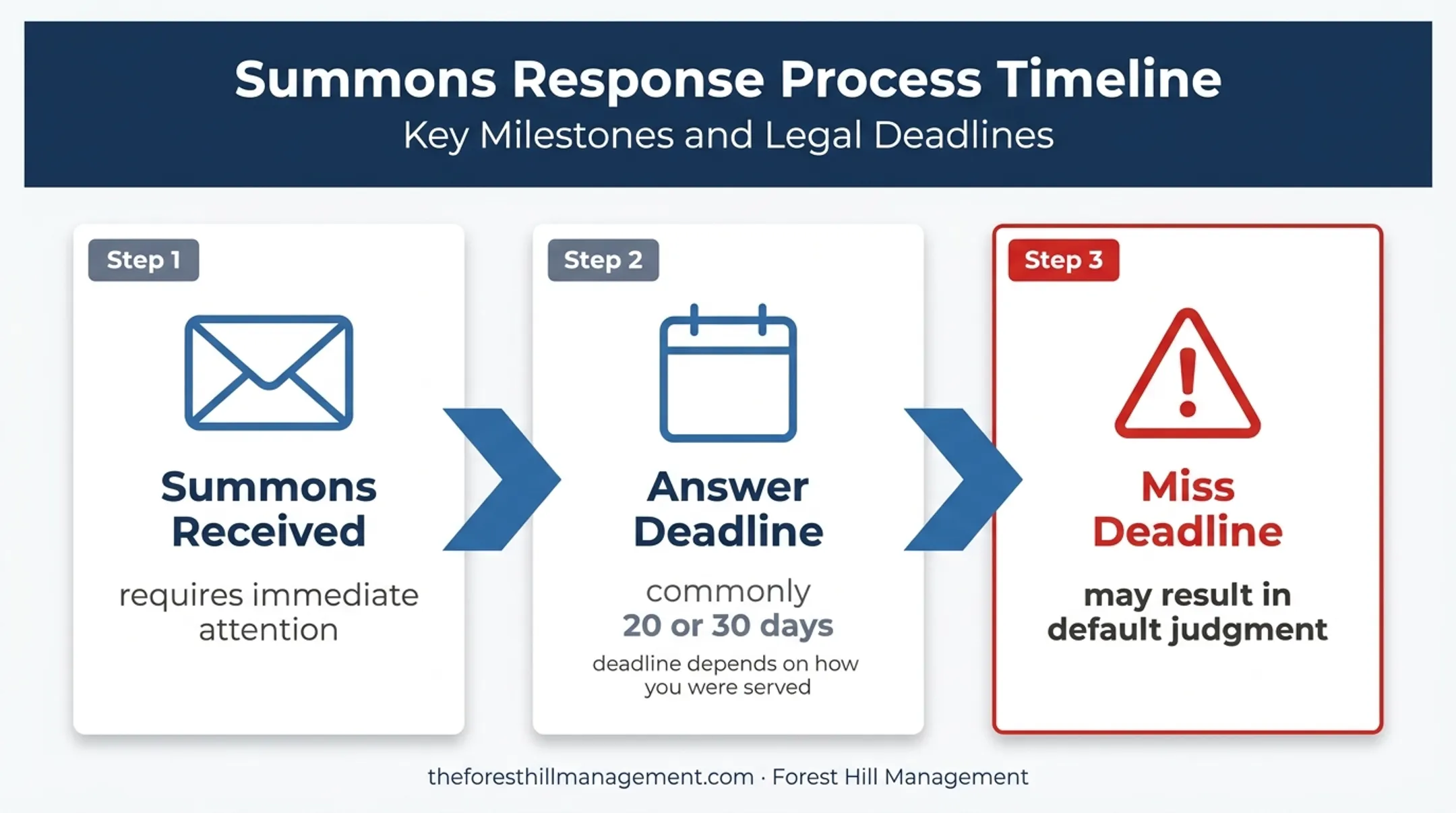
A summons and complaint requires immediate attention, even if you believe the debt is outside the limitations period. New York's court system publishes specific answer deadlines depending on how you were served, commonly 20 or 30 days. Missing that deadline can result in a default judgment regardless of whether your statute-of-limitations defense would have worked.
Common Defenses Worth Raising
- Expired limitations period
- Mistaken identity
- Incorrect balance calculation
- Missing documentation of the debt chain
- Improper service of the lawsuit
- Lack of standing by the debt buyer
If You Have No Money to Pay
Inability to pay doesn't remove your obligation to respond to a lawsuit. Options include asserting available defenses, seeking free legal aid, negotiating a resolution, or evaluating whether bankruptcy makes sense for your situation.
Forest Hill Management works with consumers on past-due accounts, including flexible payment arrangements and documentation review. We are not a substitute for legal counsel; if you are facing a lawsuit, an attorney should review your specific defenses.
Practical Next Steps for New York Consumers
Use this checklist before responding to any collector or making a payment:
- Identify the creditor — original lender vs. debt buyer
- Classify the debt — consumer, medical, retail, or business
- Locate the last payment or default date
- Check for an existing judgment
- Request documentation in writing
- Calendar every court deadline the moment you receive it
- Avoid signing or paying anything until you understand the consequences
Get professional help right away if any of these apply:
- You received a summons
- You face threatened wage garnishment or a bank restraint
- You aren't sure whether a judgment exists
- You dispute that the debt is yours
- You suspect abusive collection tactics
- The debt involves another state
If you're evaluating a settlement offer, get every term in writing first. Confirm the total amount, the payment schedule, and what happens if you miss a payment. Ask for written confirmation once the agreement is complete.
Forest Hill Management is one option for personalized guidance on resolving a past-due account. Results and terms vary by individual circumstances, and we don't guarantee a specific settlement outcome.
For case-specific legal questions, these remain the most reliable resources:
- New York courts
- Department of Financial Services
- Consumer Financial Protection Bureau
- Attorney General's office
- Local legal-aid organizations
Frequently Asked Questions
How long before a debt becomes uncollectible in New York?
There is no single "uncollectible" date: lawsuit deadlines, collection contact rules, and credit reporting each run on separate clocks. Many consumer-credit claims fall under a three-year lawsuit rule, but the exact period depends on debt type and facts.
What is the new debt collection law in NY?
The Consumer Credit Fairness Act, effective April 2022, shortened the lawsuit deadline for many consumer-credit claims to three years and blocked revival of expired claims through later payment. Always verify current requirements before relying on older guidance.
What is the "777 rule" for debt collectors?
This isn't an official New York statute. It likely refers to a federal Regulation F presumption about call frequency (more than seven calls in seven days about one debt). Don't rely on informal internet terminology over the actual regulation.
What happens if a debt collector sues you and you have no money?
You still need to respond to the lawsuit by the deadline on the summons. You may have defenses or exemption rights, so seek legal aid or an attorney promptly rather than ignoring the case.
Does making a payment restart the statute of limitations on debt in New York?
For covered consumer-credit claims under CPLR 214-i, a payment made after the deadline has already expired does not revive it. A separately signed new agreement could raise different issues, so verify the facts before signing anything.
How do I know whether a debt is past the statute of limitations in New York?
Compare your account agreement, payment history, default date, and any collection notices against the applicable period for that debt type. A date on your credit report alone doesn't answer this legal question. You need the underlying account records.