-p-500%20(1).png)
Medical Debt Collection: Overview, Credit Impact & Solutions

Need Help Reviewing Your Account?
Contact UsA medical collection notice rarely arrives with a clear explanation. Billing codes don't match your insurance statement, the collector's name isn't on any of your provider paperwork, and the balance looks different from what you remember owing. That confusion is common, and it's usually a sign you need to compare documents before reaching for your wallet.
This guide walks through what medical debt collection actually means, how it can touch your credit reports, what your rights are, and the realistic paths to resolving a balance without making it worse.
One note before we start: U.S. medical-debt and credit-reporting rules shift often. Some of what's cited here reflects 2022-2025 policy changes, and a few proposed federal protections were vacated by a court in 2025. Always confirm current requirements with an official source, and talk to a qualified attorney if you're facing a lawsuit or have questions about state time limits.
Key Takeaways
- Verify medical bills before paying: many are already paid, incorrect, or assistance-eligible.
- Monitor credit bureau medical-collection rules; they differ from law and keep changing.
- Save every bill, insurance statement, dispute letter, and phone call note.
- Compare payment plans, negotiation, and assistance before using high-interest credit cards.
What Is Medical Debt Collection?
Medical debt is any unpaid balance for healthcare: treatment, prescriptions, supplies, or related services. This includes amounts left over after insurance pays its share, plus deductibles, coinsurance, and denied claims.
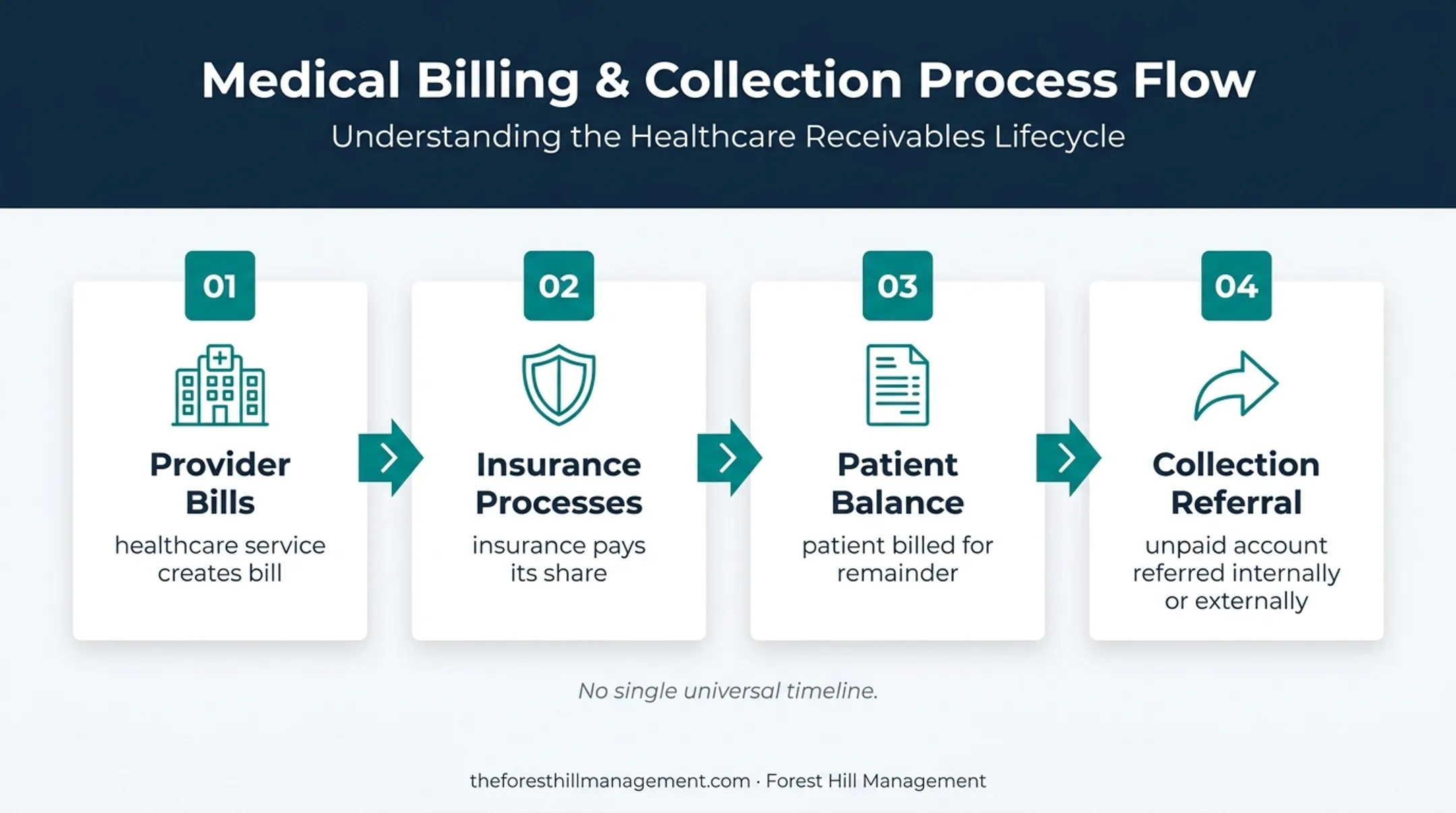
The path to collections isn't identical for every account. A provider bills you, insurance processes its portion, you're billed for the remainder, and if that goes unpaid, the account may get referred internally or handed off to a third party. There's no single universal timeline. Some providers wait months; others move faster.
Who's Actually Contacting You
Three different parties might reach out about the same bill:
- The original healthcare provider: the hospital or clinic that treated you
- A third-party collection agency: hired by the provider to collect on their behalf
- A debt buyer: a company that purchased the account outright and now owns the debt
Knowing which one you're dealing with matters because it affects where your payment goes and who has authority to negotiate.
Why Accounts End Up in Collections
Common triggers include:
- Billing errors or duplicate charges
- Missed or misdelivered statements
- Insurance claim denials that were never resolved
- Outdated contact information on file
- Genuine financial hardship
- Disputes that timed out before resolution
Before accepting any stated balance, request an itemized bill, procedure details, insurance adjustment records, payment history, and the name of the current creditor. Then compare:
- Dates of service
- Provider names
- Insurance explanation of benefits (EOB)
- Payments already made
- Any financial assistance decisions
- The collection account's specific details
If any of these don't line up, you likely have grounds to dispute before paying a cent.
How Medical Debt Can Affect Your Credit
Owing money, having an account sent to collections, and having that account reported to a credit bureau are three separate steps. Mixing them up causes unnecessary panic.
Whether a medical collection shows up on your credit report depends on the reporting company's current policy, the account's status, and applicable law. These policies have shifted substantially in recent years.
These are voluntary bureau policies, not debt forgiveness. An unpaid medical collection with an original balance of $500 or more can still appear on your report after that one-year window closes, according to TransUnion's joint announcement with Equifax and Experian.
A federal rule proposed in 2024 would have restricted medical debt from credit reports and lending decisions more broadly. It was finalized in January 2025—then vacated by a federal court in July 2025. It is not currently in force. Don't rely on outdated headlines suggesting otherwise.
Before you assume a collection is hurting you, verify what actually appears on your file.
Checking Your Reports
Pull reports from all three major bureaus and look for:
- Duplicate accounts for the same bill
- Incorrect balances
- Accounts you already paid
- Wrong service dates
- Debt belonging to someone else with a similar name
- Collections that should have aged off
Disputing inaccurate information and resolving an accurate debt are different processes. If the entry is wrong, dispute it with both the credit bureau and the company that furnished the information (the collector or provider). If it's accurate but you can't afford it, that's a payment conversation, not a dispute.
Scoring models treat medical debt differently from other collections. Newer FICO versions weigh unpaid medical collections less heavily; newer VantageScore models exclude them from scoring entirely, per Experian's 2025 guidance.
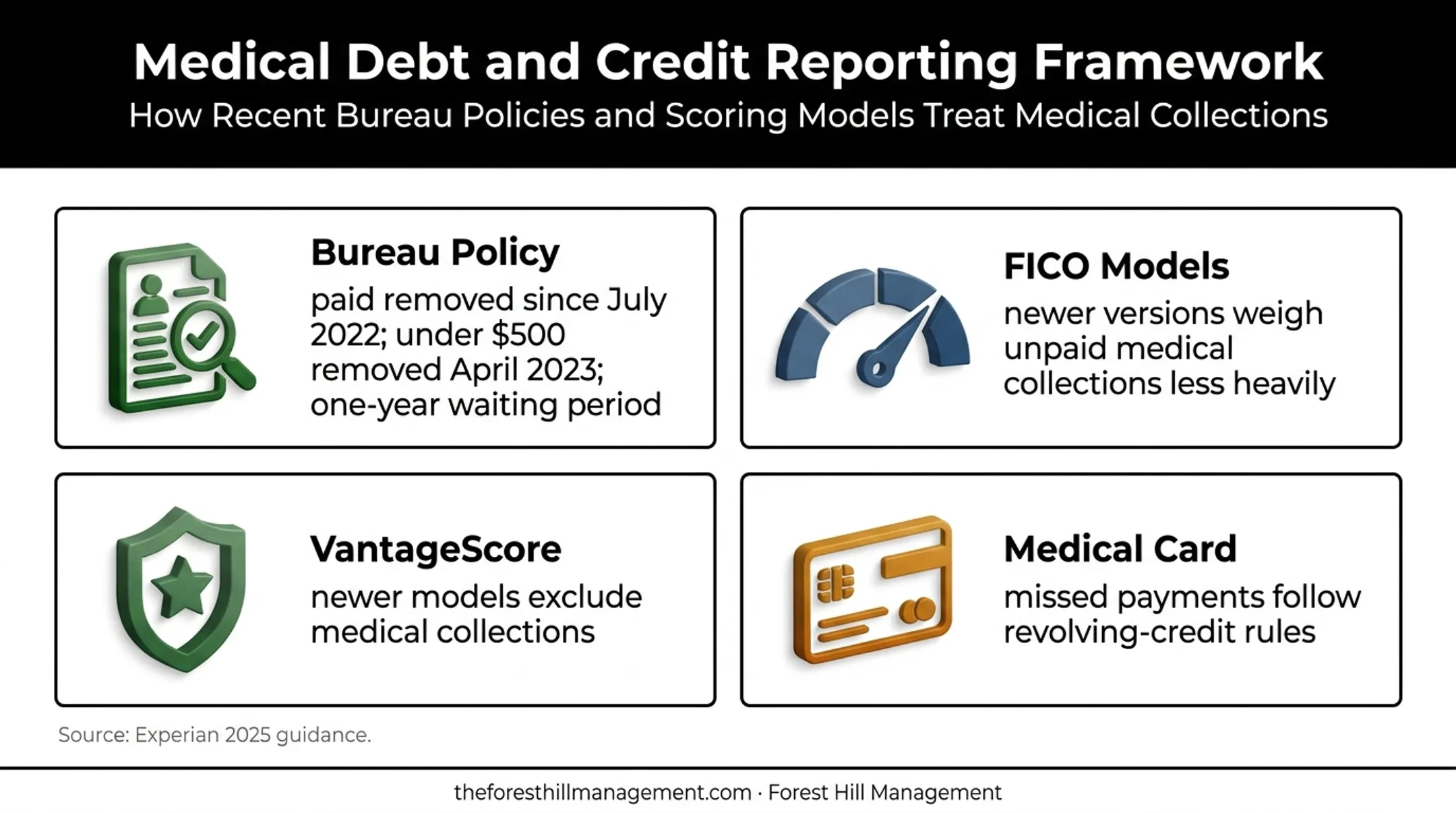
A medical credit card is not the same as a medical collection. Missed payments on that card can still hurt your score under standard revolving-credit rules.
What to Do When Medical Debt Goes to Collections
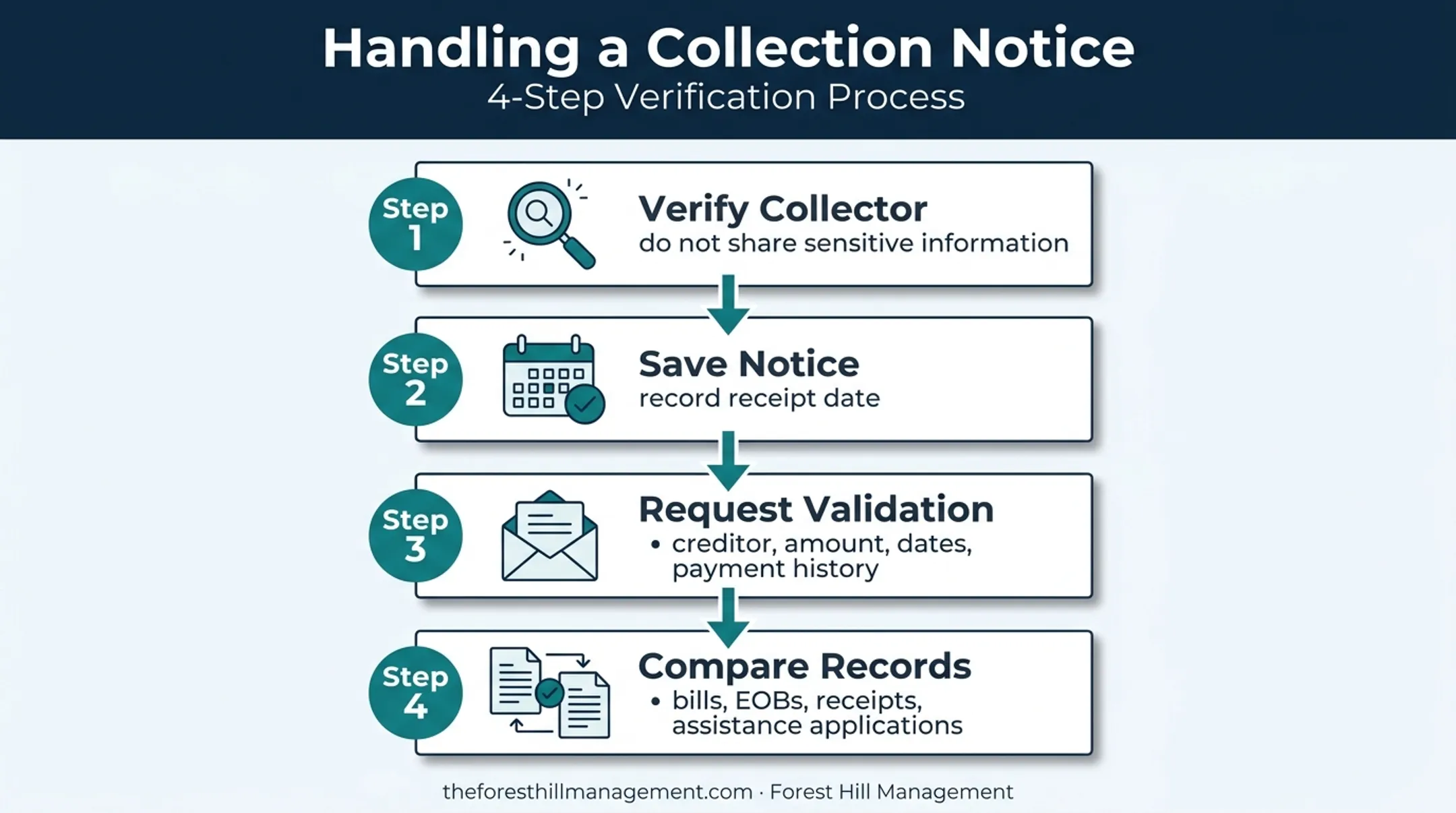
A collection notice is a claim, not automatic proof you owe the full amount. Work through this sequence before you pay or share details:
- Don't panic or share sensitive information. Verify the collector first.
- Save the notice and write down the date you received it. That date drives response deadlines.
- Request debt validation in writing: current creditor, amount claimed, dates of service, and payment history.
- Compare the claim to your records: provider bills, insurance EOBs, receipts, and assistance applications.
If the Account Looks Wrong
Send a written dispute with copies of your supporting documents, and keep proof of delivery (certified mail works well). Use that letter as your paper trail when the balance is wrong, already paid, not yours, or missing an insurance adjustment.
If the Account Looks Accurate
Contact the provider or collector to discuss a payment plan, negotiated settlement, or other arrangement. Get final terms in writing before you send any payment. Verbal promises don't hold up if something goes wrong later. When an account is transferred, a receivables manager such as Forest Hill Management may service it and should offer documentation and a clear dispute path. If the company name is unfamiliar, verify its contact details independently—do not rely only on the number printed on the letter. A collector cannot give legal, insurance, or financial advice.
Ways to Resolve or Reduce Medical Debt
Before assuming you have to pay the full balance, start with the lowest-cost options first:
Provider-Based Options First
- Financial assistance / charity care: Tax-exempt hospitals must offer a written policy and check eligibility before aggressive collection
- Hardship reductions or uninsured discounts
- Corrected billing when the statement has errors
- Insurance appeals if a claim was wrongly denied
- Interest-free payment plans offered directly by the provider
Comparing Your Payment Path
Avoid moving medical debt onto a high-interest credit card or medical financing product without comparing terms first. Deferred-interest promotions can add interest on the original charge if you miss the payoff deadline. The CFPB has flagged promotional rates above 25% in some cases.
Financing can also block hospital assistance later, because the balance is no longer treated as medical debt once it sits on a card.
For complex bills or insurance disputes, a patient advocate, nonprofit assistance program, or legal-aid organization can help. Bankruptcy, litigation, and formal debt settlement carry real consequences. Get advice from a qualified professional before you pursue any of them.
Quick decision framework:
- Balance looks wrong? → Dispute it first.
- Hardship is the real issue? → Apply for assistance.
- Debt is accurate but unaffordable? → Negotiate a plan.
- Facing a lawsuit or time-limit question? → Get legal advice.
Know Your Rights and Avoid Collection Scams
Federal law restricts what collectors can do. Under the FDCPA, they cannot:
- Harass you
- Lie about the amount or legal status of a debt
- Threaten actions they can't legally take
- Demand payment for amounts you don't actually owe
Verifying a Real Collector
- Look up the provider's or agency's official contact information yourself; don't trust only what's on the notice
- Request written validation before paying anything
- Confirm the account details match your own records
- Be skeptical of urgent, same-day payment demands
- Never rely solely on caller ID or a link in an unsolicited text or email
Red Flags for Scams
- Threats of immediate arrest
- Demands for payment via gift cards or cryptocurrency
- Refusal to provide anything in writing
- Pressure to skip the normal dispute process
- Requests for far more personal information than needed to verify the account
If something feels off, document dates, names, and what was said, then report it to the FTC, CFPB, your state attorney general, or a legal professional.
Telling a collector to stop contacting you does not erase a valid debt, and it may not stop all legally permitted communication, including a lawsuit. If you receive court papers, get legal advice immediately rather than ignoring them.
Frequently Asked Questions
What is medical debt?
Medical debt is money owed for healthcare services, treatment, or supplies, including balances left after insurance pays its share. An ordinary medical bill becomes a "collection account" only once it's referred to or sold to a collector.
Do medical bills affect my credit score?
It depends on current bureau policies, the account's status, and which scoring model is used. Check your reports directly rather than assuming every unpaid medical bill will show up.
What happens if you don't pay medical debt in the USA?
You may be contacted by a collector, and the debt could appear on your credit report if it meets current reporting thresholds. In some cases, unpaid debt can lead to legal action, though state time limits and protections vary widely.
How do you remove medical collections from a credit report?
Inaccurate or unverifiable entries can be disputed with the credit bureau and the furnisher. Accurate debt may still need to be resolved, and you should review its reporting period under current lawful limits. Submit documentation to both the bureau and the furnisher.
Is it better to pay off a collection in full or settle for less?
Full payment resolves the balance outright, while settlement reduces what you owe but may leave a different account notation. Get any agreement in writing, and consider asking how each option will be reflected on your credit record.
How do you know if a debt collector is real or fake?
Legitimate collectors provide written validation and independently verifiable contact details, and their account information matches your own records. Be wary of unusual payment demands, and report anything suspicious to the FTC or CFPB.