-p-500%20(1).png)
What is a Charge-Off? Definition, Impact & Recovery
Need Help Reviewing Your Account?
Contact UsIntroduction: What Is a Charge-Off?
Seeing "charged off" on your credit report is unsettling. So is opening a collection letter for a debt you thought was closed, or discovering your bank shut down your checking account over a negative balance.
A charge-off doesn't mean the debt disappears. It means a creditor has decided repayment is unlikely and has recorded the account as a loss for accounting purposes. You may still owe the money.
This guide breaks down how charge-offs happen, what they mean for your credit and legal exposure, and how bank account charge-offs differ from credit accounts. You’ll also get practical steps to move past one.
Key Takeaways
- A charge-off is an accounting and credit-reporting status, not debt forgiveness
- Your original creditor may keep collecting, hand the account to a collector, or sell it to a debt buyer
- Paying or settling can update the account status, but it won't automatically erase accurate history
- Verify the debt first, then choose a resolution path that fits your actual budget
What Is a Charge-Off and How Does It Happen?
A charge-off happens when a creditor decides a seriously delinquent account is unlikely to be repaid and writes it off as a loss on their books. According to Equifax, a charge-off is an accounting entry, not a legal release from the debt.
The account typically gets closed to new charges, but your obligation to pay usually remains.
A charge-off is not the same as:
- Debt forgiveness – the creditor still expects payment
- Collection account – a separate entry that may appear if the debt gets transferred
- Final resolution – a status update, not an ending
Typical Path to Charge-Off
Most accounts follow a similar progression:
- Missed payment – A single late payment starts the delinquency clock
- Continued delinquency – Notices and calls from the creditor increase
- Charge-off classification – The creditor writes the balance off internally
- Transfer or sale – The account may move to a new owner
When charge-off classification happens depends on the account type. Under the FFIEC's uniform classification policy, credit card accounts are typically charged off at 180 cumulative days past due. Installment loans usually reach that point around 120 days.
These are regulatory benchmarks for how banks classify losses, not a guarantee that every creditor follows an identical schedule.
Who Owns the Debt After Charge-Off?
Once an account is charged off, three things can happen:
- The original creditor keeps the debt and continues collecting internally
- The creditor assigns the account to a collection agency that collects on its behalf
- The creditor sells the account outright to a debt buyer, who now owns it
This is why you might see both a charged-off original account and a separate collection account on your credit report. That's not automatically an error, but duplicate or inconsistent reporting can and should be disputed if the details don't match.
How a Charge-Off Affects Your Credit, Finances, and Legal Risk
A charge-off signals extended missed payments, which lenders read as elevated risk. That's why it's classified as derogatory information. It can affect:
- Loan and mortgage approvals
- Credit card offers and credit limits
- Interest rates on new credit
- Banking relationships in some cases
Those tighter terms raise your cost of credit and can limit access to financing until the account ages or is resolved.
The exact score impact varies. It depends on your overall credit history, the scoring model used, and how many other accounts are in good standing. No service can promise a specific point recovery.
How Long Does It Stay on Your Report?
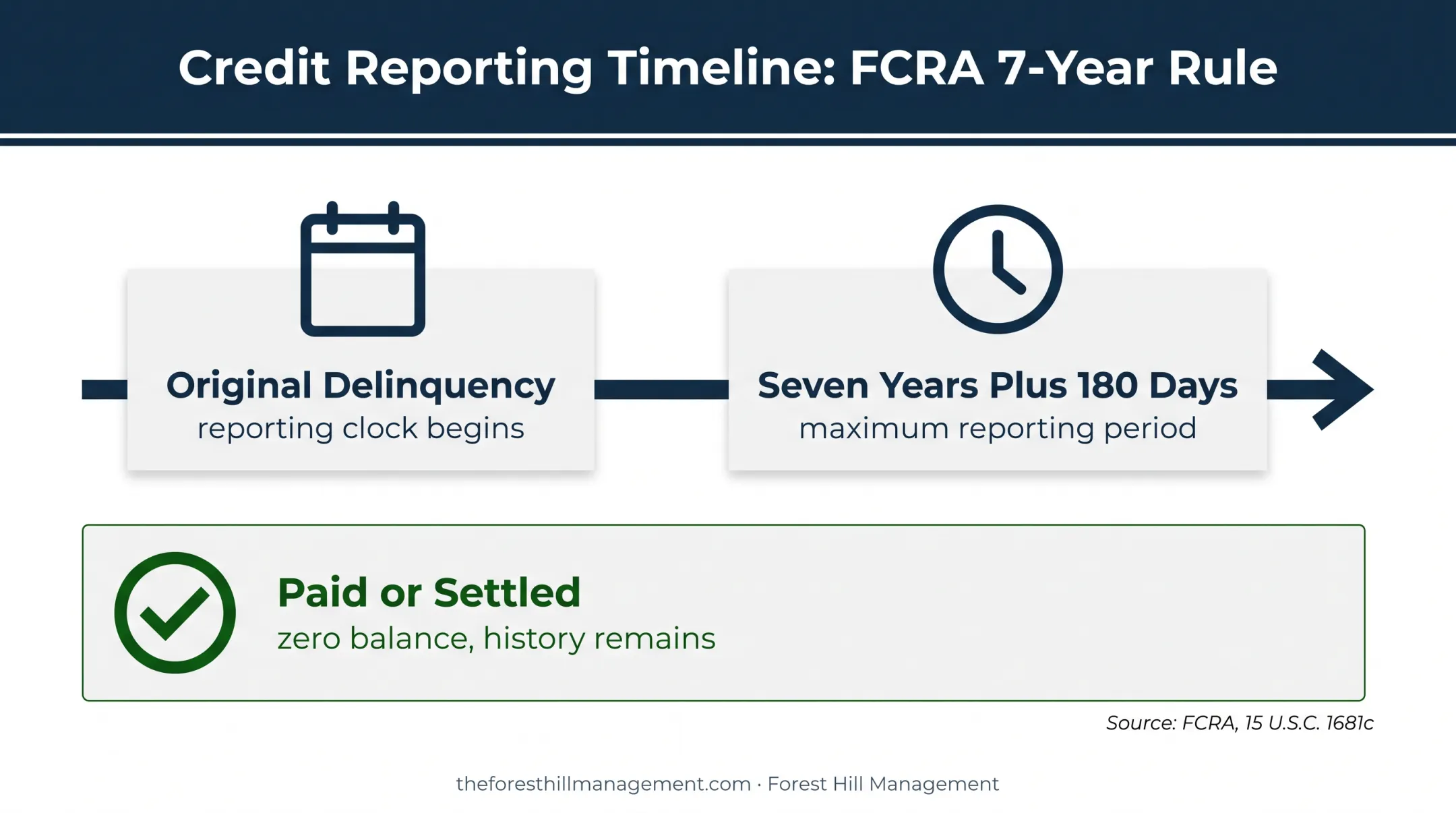
Under the Fair Credit Reporting Act, negative information tied to a charge-off can generally remain on your credit report for up to seven years. That clock is measured from the date of the original delinquency that led to the charge-off—not the charge-off date itself.
Per 15 U.S.C. § 1681c, the period actually runs seven years plus 180 days from that initial delinquency window.
Paying or settling the account can still help while it remains on file. The status may update to "paid" or "settled" with a zero balance, which future lenders often view more favorably. It does not erase the accurate history of the missed payments.
Credit Reporting vs. Statute of Limitations
These two timelines get confused constantly, and the difference matters:
The CFPB warns that making a payment or even acknowledging an old debt can restart the statute of limitations clock in some states, even on debt that was previously time-barred. If you're contacted about an old account, confirm your state's rules before paying anything.
If you get sued: Respond by the deadline listed in the court papers. Ignoring a lawsuit can lead to a default judgment against you. Speak with a qualified attorney for state-specific questions.
How to Recover From a Charge-Off
Before agreeing to anything, verify the debt. Compare the notice you received against your credit reports and your own records.
Step 1: Confirm the Details
Check that the following match across all sources:
- Original creditor name
- Account number
- Balance owed
- Dates of delinquency
- Current account owner (original creditor, collector, or debt buyer)
If a third party contacts you, you have the right to request debt validation. Forest Hill Management, for example, identifies the original creditor on transferred accounts in its consumer communications. If you can't find that information, contact them at (888) 471-0109 or info@foresthillmanagement.com.
Step 2: Address Inaccuracies or Identity Theft
If something doesn't match, or you don't recognize the debt at all:
- Keep every statement, letter, and payment record
- Dispute the error with the credit bureau and the company that reported it
- Report suspected identity theft through IdentityTheft.gov
- Report suspected scam collectors to the FTC or CFPB
Step 3: Choose a Resolution Path
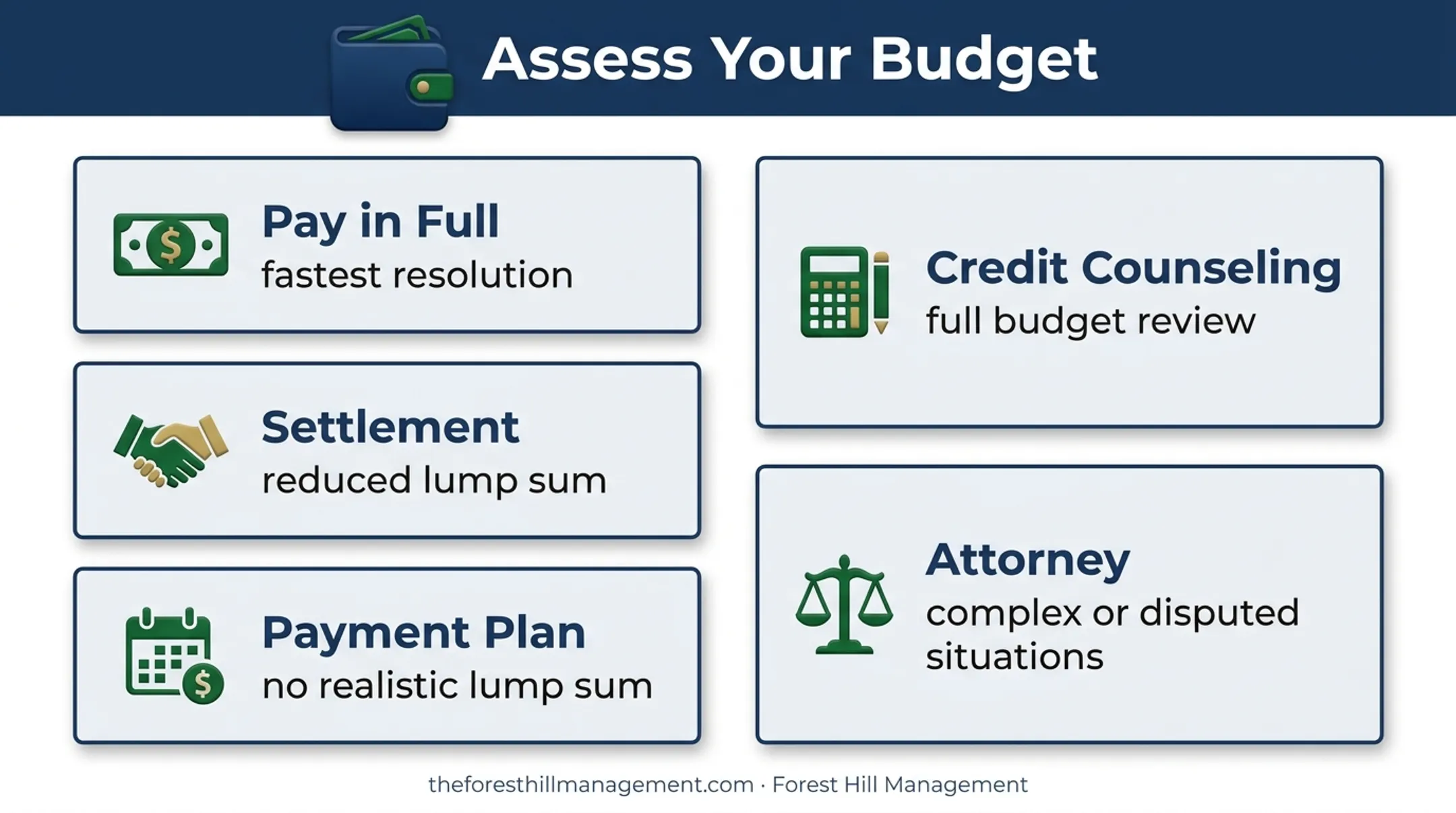
There's no single "right" answer here. It depends on your finances:
- Pay in full if you can afford it and want the fastest resolution
- Negotiate a settlement for a reduced lump-sum payment
- Set up a payment plan if a lump sum isn't realistic
- Contact nonprofit credit counseling for a full budget review
- Consult an attorney for complex or disputed situations
Whichever route you choose, assess your actual budget first. Don't commit to a plan you can't sustain alongside rent, utilities, and other essentials.
Before you pay anything, get it in writing: the exact amount, the payment schedule, confirmation that payment resolves the account, and how it will be reported to credit bureaus.
When Forest Hill Management is the verified contact on your account, the team can walk you through available resolution options. This isn't a substitute for legal or credit advice, and no organization can guarantee a specific credit outcome.
After You Pay
- Keep your proof of payment or settlement indefinitely
- Check your credit report in the following billing cycles
- Follow up in writing if the account isn't updated as agreed
What Happens to a Charged-Off Bank Account?
A charged-off checking account works differently from a charged-off credit card. Instead of a credit bureau issue, it's typically a checking-account reporting issue.
Banks usually close an account after it stays overdrawn or carries a negative balance for a set period.
Federal interagency guidance suggests overdraft balances generally get charged off no later than 60 days from the date they first went negative. Timing still varies by institution and isn't a universal deadline.
What can happen next:
- Debt referral or sale to a collection agency
- Reporting to a specialty checking-account company such as ChexSystems or Early Warning Services
- Harder approval when opening a new checking account elsewhere
- Separate collector reporting to conventional credit bureaus, even though those bureaus rarely track routine checking history
What to Do
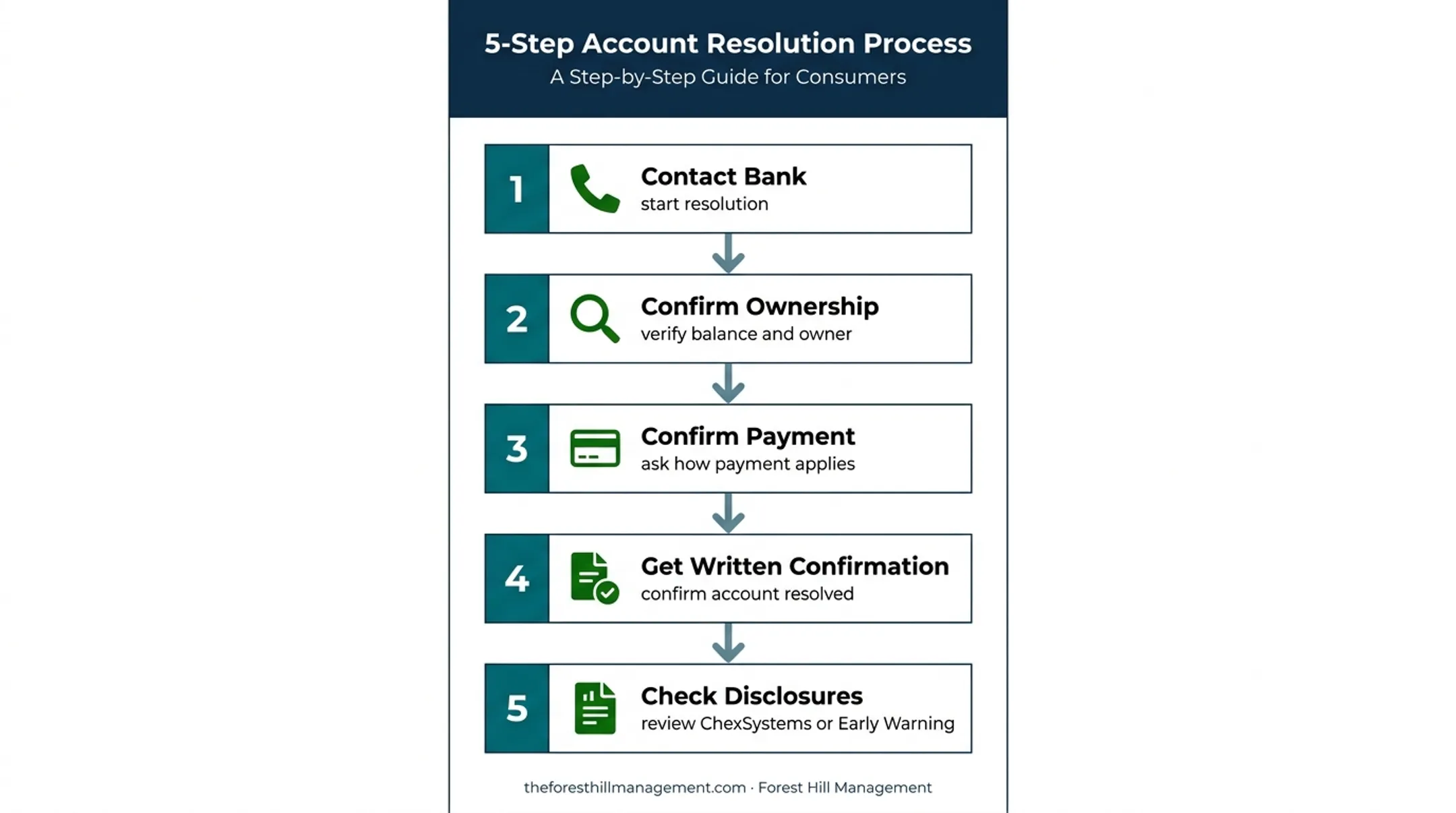
- Contact the bank or a verified collector directly to start resolution
- Confirm the balance owed and who currently owns the debt
- Ask how payment will be accepted and how it will be applied
- Get written confirmation once the account is resolved
- Request your free ChexSystems or Early Warning disclosure and check it for errors
Rebuilding Credit and Preventing Future Charge-Offs
Recovery isn't instant. It comes from consistent, positive financial habits built over time, not a quick fix.
Practical habits that help:
- Pay every current account on time, even small ones
- Keep credit card balances well below your limit
- Set up account alerts for due dates and low balances
- Automate payments only when you're confident the funds will be there
- Build even a small emergency fund to avoid future missed payments
- Contact creditors immediately if you hit a financial hardship, before you fall behind
Those habits work best when you also monitor your credit and get help early if budgeting gets tight. AnnualCreditReport.com provides weekly free reports from all three bureaus, and reviewing your own credit doesn't hurt your score. The National Foundation for Credit Counseling connects consumers with certified counselors for a confidential budget review.
Be skeptical of anyone promising to erase accurate negative information. The FTC has repeatedly warned that no legitimate service can guarantee removal of accurate charge-off or collection history. Genuine recovery comes from time, consistency, and accurate reporting.
Frequently Asked Questions
Should I pay a charged-off bank account?
The balance is likely still owed, but verify the account details, current owner, amount, and legal status first. Get payment terms in writing before sending any money.
What happens if my bank account gets charged-off?
The bank typically closes the account and may report the negative closure to a specialty checking-account reporting company. Contact the bank or verified account owner to confirm your balance and resolution options.
Can I still make payments on a charged-off bank account?
Yes, often through the bank, a collection agency, or a debt buyer, depending on who currently owns it. Get payment instructions and written confirmation from a verified source before paying.
Can a collection agency collect on a charged-off bank account?
Yes. Banks can assign or sell charged-off balances to collectors, subject to federal and state collection laws. Always verify the debt and understand your validation and dispute rights first.
How long does a charge-off stay on your credit report?
Generally up to seven years, measured from the original delinquency date rather than the charge-off date itself. This is separate from your state's statute of limitations for lawsuits.
Does paying a charge-off remove it from your credit report?
Usually not. Payment typically updates the account to "paid" or "settled" rather than deleting the history. Inaccurate or duplicate reporting, however, can be disputed and corrected.